How Mobile CCTV Cameras Help Prevent Fly Tipping
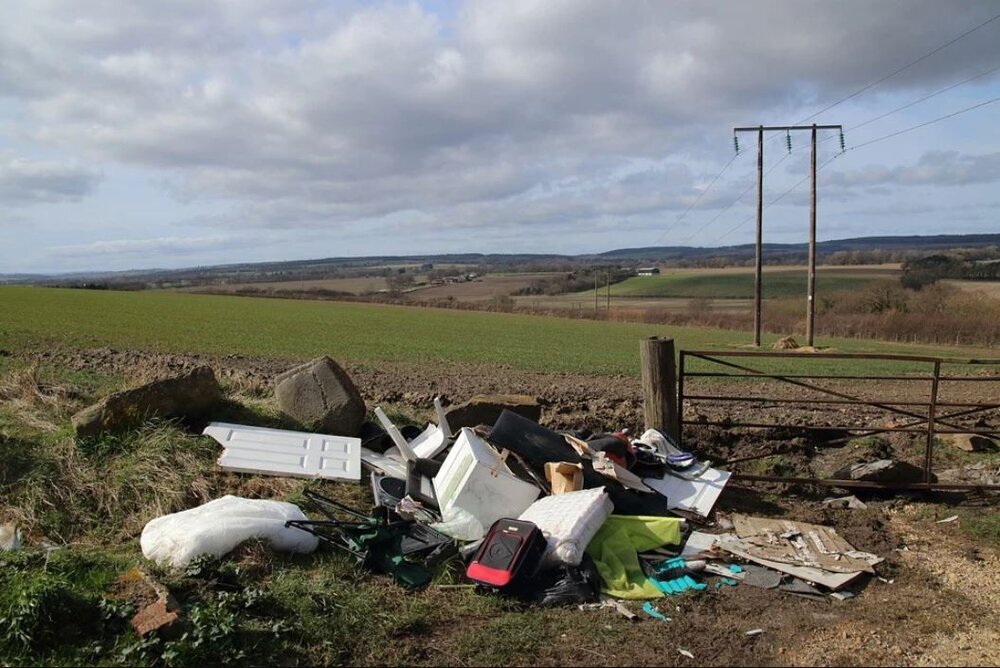
Last year, local authorities in England alone dealt with over 1 million incidents of illegal fly tipping – an occurrence that has been increasing year on year, at a cost of almost £60 million to the public purse.
Beyond the direct financial burden, fly tipping places significant strain on local authority resources, diverts enforcement budgets and undermines efforts to maintain clean and safe public spaces.
Type “fly tipping” into Google News and you are likely to find a string of stories from local and national press covering particularly severe incidents from just the last few days. These reports highlight the scale of the problem and the growing impact on communities, landowners and local councils across the UK.
The Department for the Environment tell us that public highways are the most common place for fly tipping to occur, and the majority of instances of offending concern relatively small volumes of rubbish, ranging from between a “car boot full” to a “small van load”. Perhaps surprisingly, over two thirds of all fly tipped material is household rather than commercial waste.
Why fly tipping is difficult to deter and prosecute
It is not always a crime that is being committed by professional criminals – but nevertheless, it has proved difficult to deter and even harder to prosecute. Many offenders are opportunistic and act with the assumption that they are unlikely to be identified or challenged at the point of dumping.
Successful prosecutions of these offenders can result in fines of up to £50,000 or even 5 years in prison. The difficulty, though, is obtaining evidence which shows beyond reasonable doubt who was responsible for committing the crime. Offenders commonly know the quiet, often rural roads where they are likely not to be spotted and where they know that CCTV cameras did not exist on advance visits.
This awareness allows fly tippers to exploit gaps in traditional surveillance and avoid locations with permanent or highly visible security measures.
Using redeployable CCTV to catch fly tippers
Local councils are increasingly opting to act smart by using redeployable fly tipping CCTV cameras, which don't require new physical infrastructure, wiring or lighting to be put in place (which comes at great cost, and results in a very overt camera placement).
Redeployable CCTV cameras can help combat illegal dumping by introducing surveillance quickly and discreetly, capturing the vital video footage required for prosecutions – usually facial images and car registration numbers. This evidential footage can play a critical role in supporting enforcement action, fixed penalty notices and court proceedings.
The cameras are commonly used on a rotational basis at known tipping locations to catch unsuspecting offenders. Alternatively, they can be used as part of a reactionary strategy – placing them overtly at existing tipping sites to deter further abuse.
This flexible approach enables councils to respond dynamically to emerging hotspots while maximising the effectiveness of a limited number of devices.
A flexible CCTV solution for councils and enforcement teams
The lightweight redeployable cameras work in day and night conditions, are powered by existing street lighting or their own dedicated battery and can be installed on posts, buildings or even trees in a matter of minutes. What's more, they are fully weatherproof and, in the event that offenders identify the cameras, are resistant to vandalism and even shotgun fire.
Redeployable cameras can be remotely monitored via mobile data link by nearby enforcement teams or in central CCTV control rooms, with video footage available for rapid download for evidential purposes.
Revader Security's range of fly tipping CCTV solutions are ideal for local authority, police and commercial customers seeking to address this growing problem while minimising costs. By reducing the need for permanent infrastructure and repeated site visits, redeployable CCTV offers a cost-effective and scalable approach to fly tipping prevention.
Summary
Fly tipping remains a persistent and costly challenge for councils, landowners and enforcement teams, particularly where traditional surveillance methods fall short. Redeployable CCTV provides a practical way to deter illegal dumping, gather reliable evidence and respond quickly to emerging hotspots without the burden of permanent infrastructure.
By combining flexibility, resilience and evidential value, mobile CCTV enables a more targeted and effective approach to tackling fly tipping and protecting public spaces over the long term.
Why REVADER?
We provide redeployable CCTV solutions to help organisations address crime in a practical and proportionate way. Our systems are intended to be straightforward to deploy, reliable in operation and flexible enough to support targeted enforcement across a range of locations.
By minimising the need for permanent infrastructure and complex installation, we help customers deploy surveillance where it is most effective, without unnecessary cost or disruption. Our approach supports evidence gathering, deterrence and ongoing monitoring as part of a wider strategy to manage fly tipping and other environmental offences.
Please contact us for further information on how we can help to fulfil your specific surveillance requirements.
Frequently Asked Questions
-
CCTV helps prevent fly tipping by deterring offenders and capturing clear evidence when illegal dumping occurs. Mobile CCTV cameras deployed at fly tipping hotspots reduce the opportunistic dumping of rubbish and support councils in identifying offenders beyond reasonable doubt, helping to tackle fly tipping more effectively.
-
Local authorities typically use redeployable mobile CCTV cameras and CCTV towers to tackle fly tipping. These CCTV solutions can be easily installed, moved between known fly tipping hotspots and used on rural roads, public land and other areas prone to fly tipping incidents.
-
Councils use mobile CCTV both covertly and overtly to deter illegal dumping. Camera towers placed at persistent sites discourage fly tippers, while covert CCTV cameras help catch offenders and reduce clean up costs without permanent infrastructure.
-
CCTV towers offer strong visual deterrence and reliable CCTV coverage, making them effective for fly tipping prevention. They help councils and businesses protect the local environment, support enforcement activity and contribute to the wider fight against fly tipping across the UK.